
Paying for plasma is illegal where most Canadians live. So why did Canadian Blood Services hire for-profit Grifols to collect it?
Write a letter to your MP
Paying for plasma is illegal where most Canadians live. So why did Canadian Blood Services hire for-profit Grifols to collect it?
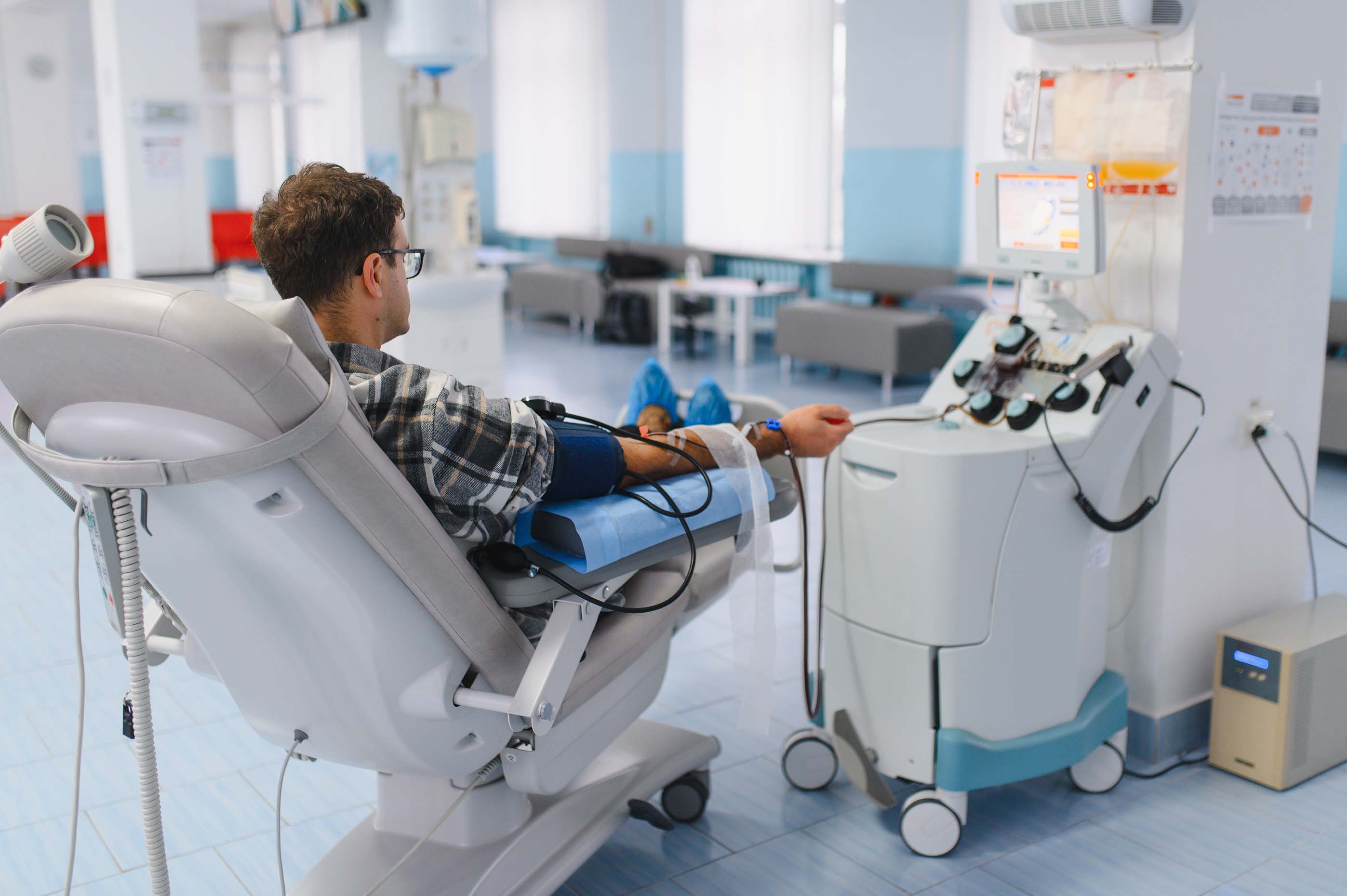
Rodiyat Alabede was 22 when she went to give plasma at a clinic on Taylor Avenue in Winnipeg last October. The clinic is run by Grifols, a Spanish for-profit company that pays people for their plasma.
The machine drawing her plasma issued five alerts during the procedure, according to documents obtained by The Globe and Mail, the second alert should have terminated the extraction. Instead, staff ignored a further 3 alarms and 40 minutes after the procedure should have been stopped, Ms. Alabede went into cardiac arrest, and she didn't survive.
Her death made national news. But it wasn't a freak accident at one bad clinic. It was a tragic incident following a concerning pattern, one that runs straight through the company now collecting a growing share of Canada's plasma, and straight back to Canadian Blood Services, which hired Grifols, going so far as to name them an ‘agent’ of CBS in order to convince provincial governments to allow paid plasma.
So how did a country that swore off paying for blood end up here?
In Quebec, Ontario, and B.C., where most people live in Canada, it's illegal to pay people for blood or plasma.
These bans were created in response to one of the worst public-health disasters in the country's history. In the 1980s, more than 30,000 people in Canada were infected with HIV or hepatitis C through poorly screened blood. The inquiry that followed, led by Justice Horace Krever, reshaped how the country handles blood and it recommended against paying donors at all.
The reasoning was simple and grim. When you pay people for blood, you give them a reason to come back more often than is safe, and a reason to stay quiet about anything that might rule them out of donating. Money is exactly the wrong incentive to introduce into a blood and plasma supply.
Because Canada's own blood agency invited it in.
In September 2022, Canadian Blood Services, the non-profit responsible for keeping the national blood supply safe and self-sufficient, signed an agreement letting Grifols open paid plasma centres across the country. Donors are paid for each visit, reportedly between $30 and $100 depending on how often and how much they give. The terms of the deal have never been made fully public.
Here's why that matters. CBS exists to build a public, voluntary plasma system Canadians can rely on. Instead, CBS has partnered with Grifols, a company built on the very thing Canada spent decades trying to keep out of its blood and plasma supply: paying for donations.
Almost every adverse reaction from donating plasma in Canada over the last decade has happened within a Grifols clinic.
Data CBC News obtained through an access-to-information request shows that of the 27 serious adverse reactions reported by plasma donors in Canada between 2016 and 2026, including heart attacks, blood clots, destruction of red blood cells, loss of consciousness, 25 came from sites now owned by Grifols.
The inspection record is no better. Of every licensed blood establishment Health Canada has ever rated "non-compliant," Grifols has collected more of those ratings than all the other operators in the country combined.
And the Winnipeg clinic where Alabede died had gone nearly three years without a recorded inspection. When inspectors finally looked, they found problems with staff training, procedures that weren't being followed, and incomplete records. Grifols didn't mention the five machine alerts from Alabede's donation in its first report to the regulator. It was only when her family demanded documents that this information was found.
A paid plasma centre makes money by collecting more plasma, faster. That single fact bends every incentive in the wrong direction.
More donations, more often, with fewer interruptions, means more revenue. Stopping a procedure when a machine flags a warning, slowing down, turning away a donor who shouldn't give that day, costs the company money. The pressures that keep a donor safe and the pressures that keep a clinic profitable point in opposite directions.
This is why the World Health Organization and the International Red Cross have spent decades urging countries to keep blood collection voluntary. Volunteer systems aren't safer because volunteers are better people. They're safer because no one in them is being paid to look the other way.
The regulator should have caught this
It shouldn't take an access-to-information request to find out that Grifols accounts for 25 of 27 serious donor reactions and has failed more inspections than every donation place. But that's how the public learned about it, through the media, in 2026, months after the first death.
Health Canada's job is to inspect these clinics and flag problems early. Instead, the centre where Rodiyat Alabede died had gone nearly three years without an inspection. The findings that did exist stayed in a drawer until reporters pried them loose.
A safe blood system depends on a regulator that inspects rigorously and reports shortfalls before donors get hurt, not one that waits to be asked.
A safe blood system can't be built on payments to donors, private profit, and opaque contracts. The Minister of Health should take action before one more person suffers injury or death in these for-profit clinics: